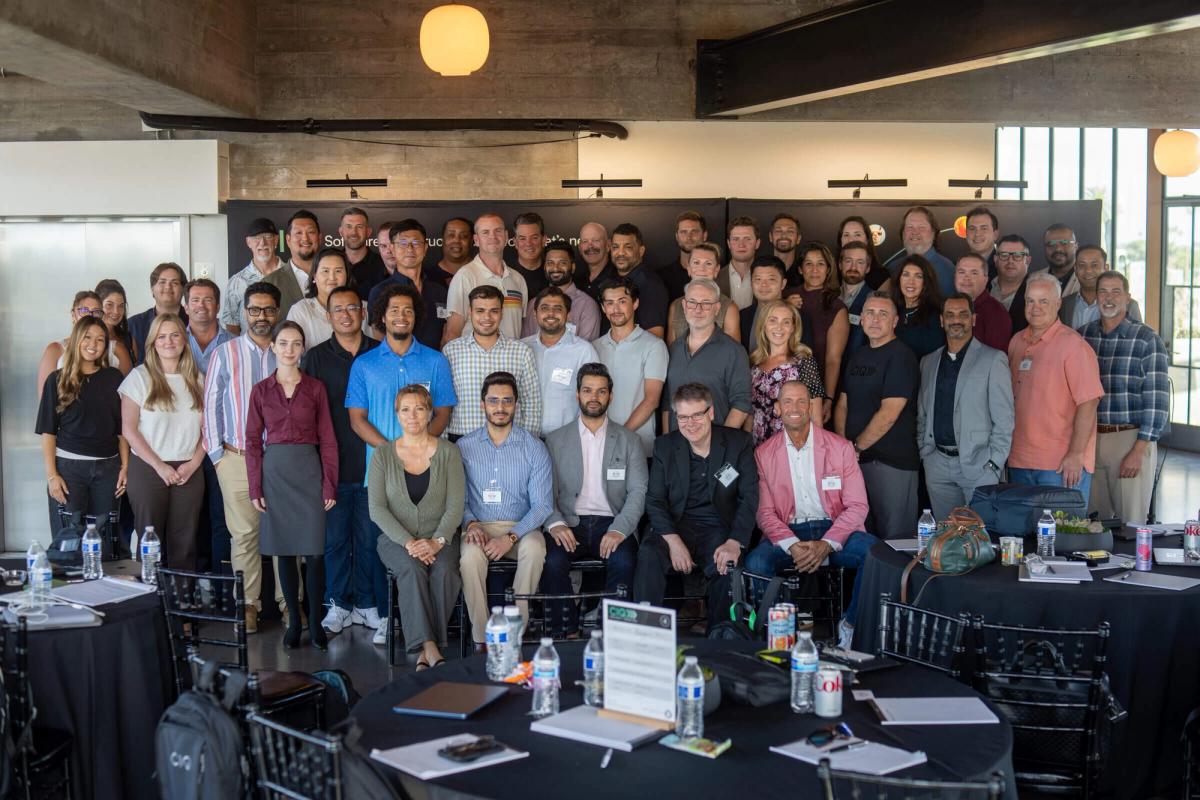
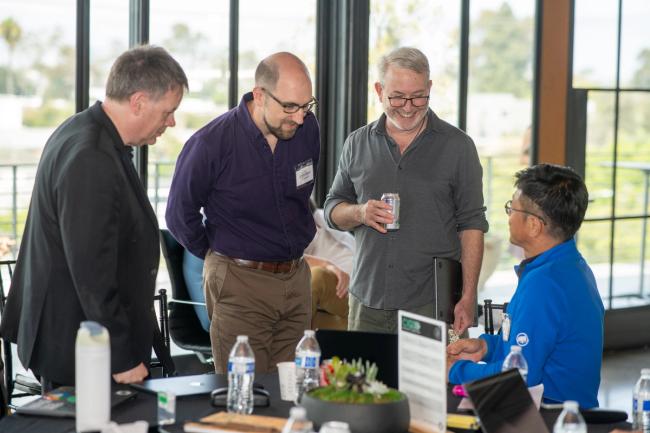
CIQ brought our entire global sales team to our Los Angeles office last week for our H2 sales kickoff, along with much of product and marketing. People flew in from Japan, Korea, India, Europe, and the Middle East. Three days, no laptops, assigned seats that put people next to colleagues they may rarely work beside.
The people who spend their weeks inside your environments give us the clearest read we get on what you need. For three days, we brought these great minds together and here are the seven items that we see as clear industry and market signals:
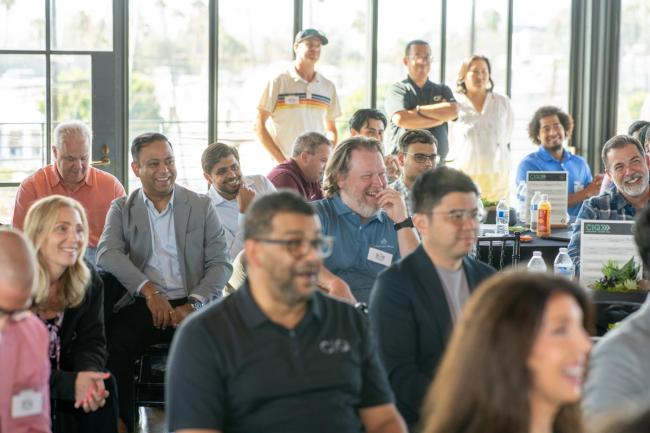
The seven market signals we've noticed
AI moved from experiment to production. Teams that ran pilots last year now serve customers with those AI workloads as part of the core business. Tolerance for a fragile stack drops to zero the moment revenue depends on it.
AI and HPC are converging. The problems the high-performance computing community has worked on for two decades are the ones the AI industry is confronting now: multi-node coordination, interconnect performance, scheduling scarce accelerators, reproducibility. Teams that have run scientific clusters for years now support generative AI on the same infrastructure.
Hardware has to last longer. Memory, accelerators, and storage are hard to source, lead times stretch out, and replacement schedules keep slipping. The need to get more out of the hardware they already own has become one of the most common reasons customers call us.
Training and inference sit in separate silos. Organizations running both maintain two provisioning stacks, two schedulers, and two support contracts, with capacity stranded on one side while the other runs hot.
Sovereignty is now a global conversation. More customers need modern AI infrastructure inside their own borders, with an auditable answer for how it was built. Teams in three regions asked: What does sovereign AI actually mean?
Demand for AI and HPC expertise is outpacing supply. This is the shift I find most interesting, and it is a tooling problem as much as a hiring one. CIQ already solves this for our customers: Fuzzball abstracts the infrastructure layer so a researcher can define and run a workload without first becoming a cluster administrator. Warewulf Pro puts a cockpit-based GUI interface on operations that previously required users to have deep command line fluency. This allows HPC and AI staff to focus on the problems only they can solve.
Fragmentation fatigue shows up across all regions. Customers are tired of assembling a working environment from a dozen projects that were never designed to work together, then maintaining that assembly forever.
These problems are interconnected, which was the clearest thing I took from the three days of customer stories.
Solve the problems together before they fail together
One of the pairings I heard most often while in Los Angeles was compliance and automation. A regulated enterprise needs evidence that policy is enforced across thousands of nodes and needs automation to hold up under the same scrutiny. This is usually treated as two problems owned by two teams but RLC Pro Hardened and Ascender Pro are a natural fit to solve this.
RLC Pro Hardened arrives pre-hardened, with FIPS 140-3 validated cryptography and CAVP-certified post-quantum algorithms in place and proactive kernel protection feeding the security tooling you already run. Ascender Pro enforces that posture at first boot and automates the path from CVE discovery to remediation.
Compliance stops being a project before an audit and becomes a property of the environment
Production AI came up often with several deep discussions around tooling. Teams that have crossed into production AI keep finding the tooling they relied on did not cross with them. General purpose container orchestration degrades on the multi-node parallel training researchers actually run. RLC Pro AI delivers the CIQ Linux Kernel (CLK) and a pre-validated accelerator stack, so install to inference happens in less than 4 minutes. Fuzzball defines a workload once and runs it across both estates and into the cloud when capacity demands it, and with service endpoints, one portable workflow unifies training, fine-tuning, validation, and inference.
For nodes in production no two machines stay identical, and every performance investigation begins by ruling out configuration differences. Warewulf Pro provisions statelessly from images kept in version control, so drift stops being a variable. And for organizations where microseconds carry real money, a global high-frequency trading firm that runs its own kernel team still chose RLC Pro underneath, which says something about what a supported foundation is worth even to people who could build it themselves.
Standardize on the stack that stays open
Plenty of vendors deliver one part of the stack well. Delivering the operating system, the automation, and the orchestration layer as one coherent stack built on open source foundations is what lets you standardize instead of integrate.
Standardizing only works if the stack stays open, and ours is governed that way at every layer. CIQ engineers work alongside the Rocky Linux release engineering team under the Rocky Enterprise Software Foundation (RESF), a CIQ engineer chairs the Warewulf technical steering committee, and Warewulf ships in OpenHPC, a Linux Foundation project. Apptainer, also under the Linux Foundation, is the container standard across national laboratories worldwide. That participation is what let us move when three critical kernel vulnerabilities landed back to back in May. We contributed the fixes back, so every Rocky Linux user was protected, not only our customers.
Open governance is what makes a stack durable. The code, the fixes, and now the training data all stay inspectable. The newest expression of that commitment is OpenWALDO, launched this month by CIQ founder and CEO Gregory Kurtzer, which builds a shared corpus of AI training data with sources, licenses, and provenance attached. CIQ sponsors the project and the community governs it.
What I watched over three days was a room full of people who are not only knowledgeable but also deeply interested in customer infrastructure. A rep asked what happens to a customer's data center if their country comes under sanction. Another wanted to know exactly what "tuned" means, because a general answer lacks the context to solve customer pains. Our engineering leadership walked through the six-month plan and asked the field to keep shaping it, because the people closest to you can often see what is missing first.
Bjorn Hovland, our president, set the standard: we are not in the business of selling people things they do not need.
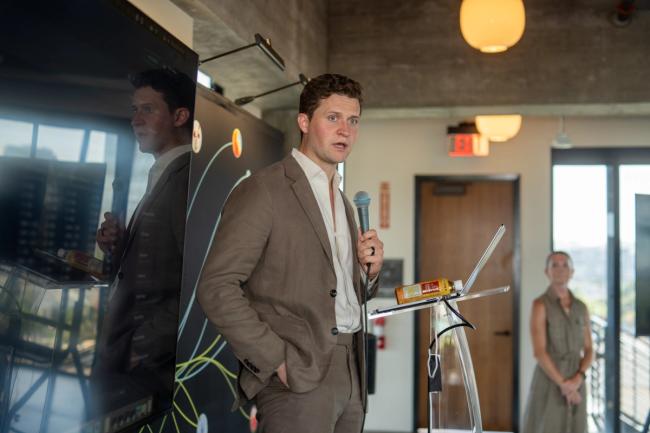
That standard is what we committed our company culture to, and it’s called CODE2: customer-centric, optimistic, dedicated, efficient, and excellent. It only means something if the person who picks up your call already understands your environment, your business, and your local concerns.
If any of this is on your plate, we would like to hear from you.
- AI training and inference
- HPC and performance intensive computing
- Core, cloud, or edge software infrastructure
- Software infrastructure security and compliance
- Large scale infrastructure automation and monitoring
Reach out to anyone on the CIQ sales and go-to-market team, or start here.