The best thing CIQ can do for a customer is give them back their attention.
Not just uptime. Attention. The cognitive space that disappears when infrastructure becomes a source of worry instead of a foundation for work: when a security disclosure interrupts a product roadmap, when a compliance question consumes an engineer who should be building, when the team that exists to serve your customers ends up serving your infrastructure instead.
CIQ was built around a different idea. When the infrastructure is genuinely taken care of, secure, stable, sovereign, and built for scale, the people responsible for it get to do something more important. The CISO can focus on strategy, not scrambling. The CIO can drive transformation, not defend uptime. The DevOps and DevSecOps teams can ship. The platform engineers can build for AI workloads without fighting the OS underneath them. The systems administrators who keep everything running can trust the foundation beneath their work.
That is what CIQ makes possible. Security, speed, sovereignty, and scale: four things that belong to CIQ so that innovation belongs to you.
A partner, not a product
What enterprises actually need today is not more software. It is a partner who can help them solve real business problems, transform workflows, reduce complexity, and unlock outcomes that matter to their business. The organizations that thrive are the ones who spend their engineering time building, not managing the foundation they are building on.
CIQ is organized around that reality. The engineers who understand your environment are the engineers who respond when something breaks. The support team that knows your infrastructure constraints tailors guidance to those constraints, not to the average customer. The distance between your problem and the person qualified to solve it is very short, because the model was built that way.
That model produces measurably different outcomes. It reduces the complexity that accumulates when a vendor operates at a distance from the actual problem. It transforms workflows because the people who understand a customer's environment can see what a playbook-level response would miss.
Three weeks that proved it
On April 29, 2026, Copy Fail (CVE-2026-31431) was publicly disclosed. A 732-byte script could root nearly every major Linux distribution built since 2017. For organizations without the right partner, that news becomes an all-hands moment: engineers pulled off roadmap work, leadership briefed under uncertainty, exposure assessed in the dark.
CIQ customers did not have that experience.
In less than one day, a Knowledge Base article with a clear mitigation was in customers' hands. The next day, patched kernels were in production for CIQ-supported Rocky Linux variants, nearly a week before other distributions had responded. Kernel engineers worked the patch while the support organization ran a mitigation track in parallel from the first hour, tested a community-developed workaround, and shipped it to customers before most vendors had acknowledged the issue existed. CIQ also contributed the fix back to Rocky Linux so that every Rocky Linux user across the community was protected, not just CIQ customers.
One customer wrote back after that KB article arrived: "We flagged this to our CISO before he even heard about it from his own feeds. I have not been able to say that before."
That customer's team spent that day on their actual job.
Dirty Frag (CVE-2026-43284 and CVE-2026-43500) followed on May 8. The support team had already reached customers who had applied Copy Fail mitigations to check whether their specific configurations created Dirty Frag exposure. For customers in federal and regulated environments, the team produced guidance built around each customer's infrastructure constraints, including IPsec dependencies that would have broken under the standard mitigation path. Nobody had to figure that out alone. Nobody had to ask. As with Copy Fail, CIQ worked directly with the upstream kernel community to ensure alignment and collaboration on the remediation, and shared the fix with the Rocky Linux community immediately. Protecting the community comes first. That has always mattered more than any commercial advantage.
Fragnesia (CVE-2026-46300) arrived on May 13, the third page-cache local privilege escalation in three weeks. Customers had watched CIQ respond to two critical vulnerabilities with a consistency and community collaborative spirit that had already reset their expectations for what Enterprise Linux support looks like. Knowledge base guidance landed the same day the vulnerability was disclosed. Customers in environments where previous mitigations had created configuration dependencies received specific, tailored follow-up. The support team brought the same urgency and specificity to the third response as it had to the first, because the standard does not change based on how many times you have done something before.
A customer security lead wrote at the end of that period: "Every time I thought I was going to have to start making calls, there was already a KB article and someone on your team reaching out on applying the fixes. I am not used to that."
That consistency is not accidental. It is the result of a team that treats operational challenges as shared problems.
Sovereignty and scale
CIQ's ability to respond this way starts with a foundation that customers actually own.
Rocky Linux from CIQ is Enterprise Linux built for organizations that need full control and guarantees over their infrastructure without dependency on a single vendor's commercial roadmap. CIQ runs Rocky Linux in its own environment, which means the engineers who maintain the platform maintain their own systems alongside yours. The vulnerabilities that matter to customers are the same ones that matter to CIQ. That alignment produces faster judgment, sharper testing, and a support team whose recommendations come from direct experience.
Scale means the same quality of engagement holds across the entire customer base. The individualized outreach, the tailored guidance, the zero customers who had to chase a status update during three back-to-back CVE responses: those outcomes scale because the process was built for them, not improvised in the moment.
The people who make it real
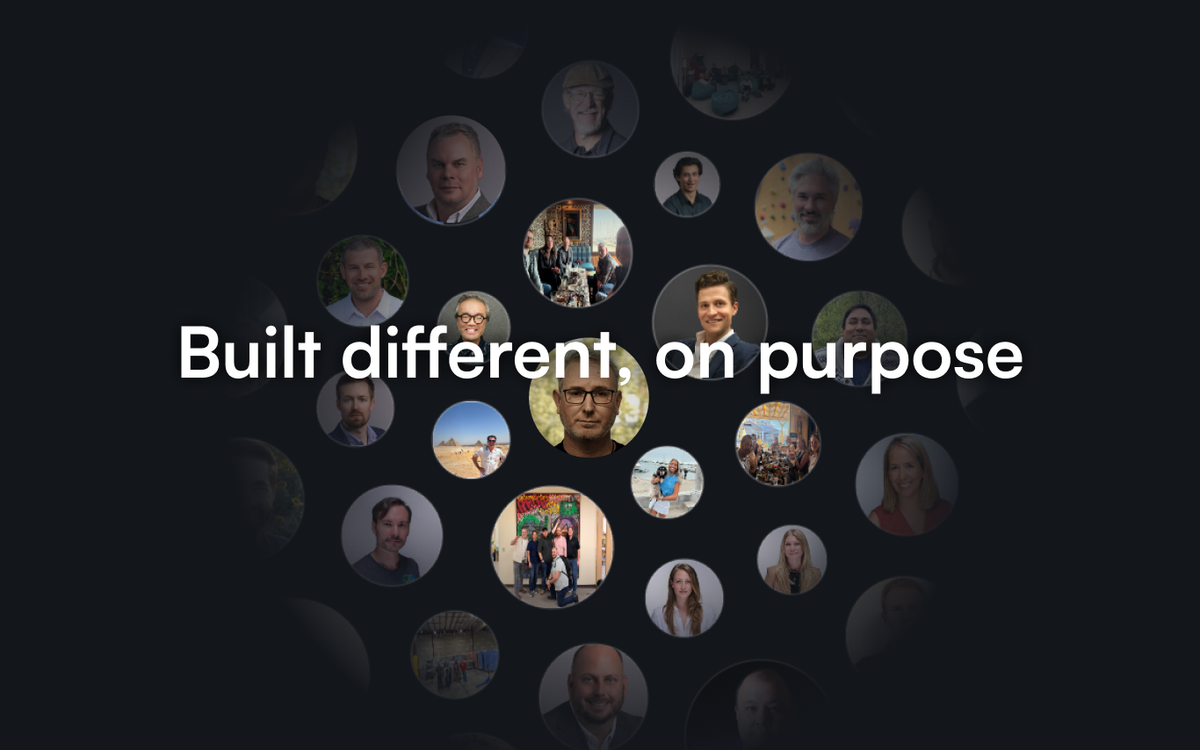
The part that does not make it into most vendor security blogs is this: the people.
One CIQ engineer is a photographer whose work shapes how the company presents itself to the world. The images in CIQ's own branding came from someone on the team. The eye that frames a shot with precision is the same eye that catches the inconsistency in a KB article before it reaches a customer.
There are people on this team who brought discipline from fields that have nothing to do with software: domains where performance is public, standards are unambiguous, and the gap between preparation and execution is visible to everyone watching. That discipline does not stay in its original context. It shows up in how someone approaches a KB article under a tight disclosure window, in the quality that holds when the pressure is highest and the audience is a customer who needed the answer yesterday.
There are people on this team who have spent years solving hard problems with incomplete information while managing everything else life requires. That capability transfers directly to the kind of judgment that holds at midnight when a fix needs to go out and three things are still unclear.
There are leaders who built things from nothing, made hard calls, and invested in the careers of the people around them because they care how the story ends for those individuals. Their presence shapes the culture in ways no framework document can fully capture.
When a patch ships ahead of timeline, the team knows about it. When a support engineer navigates a complex federal customer situation with skill, that story gets told. CIQ celebrates the wins because the culture is the product, and the product is what keeps customers free to focus on their own work.
The operating principle
CIQ organizes its culture around five principles called CODE2: Customer-Centric, Optimistic, Dedicated, Efficient, and Excellent.
Customer-centric means the first question is always whether this makes a customer's life better and their infrastructure more trustworthy. Optimistic means operational challenges are met with the energy to solve them. Dedicated means when a customer has a critical issue, someone at CIQ is already inside it, and stays there until it is resolved. Efficient means CIQ runs what it ships, integrates AI tools across engineering and support, and moves at a pace that keeps customers ahead of threats. Excellent means everyone at the company strives to be better than they are, and approaches challenges as opportunities for growth.
That is not a set of aspirations. It is a description of what happened in three weeks in May, what has defined six years of building this company, and what will hold in whatever comes next.
The offer
What CIQ actually offers is the experience of building on infrastructure you do not have to think about, supported by a team that is already thinking about it for you. It is the system administrator who briefs their CISO with information CIQ sent before the feeds picked it up. It is the engineer who can focus on the roadmap because nobody pulled them into solving a dumpster fire. It is the federal customer who got IPsec-specific guidance without having to explain their environment from scratch, because the CIQ support team already knows the customer's environment and how to back them up.
The infrastructure belongs to the customer, fully. The vulnerabilities get addressed before they become incidents. The support organization knows the difference between your environment and the average one, and responds accordingly. And when the third major CVE in three weeks arrives on a Tuesday morning, the answer is already on its way.
That is what six years of building this company, this team, and this culture adds up to. A partner who treats your operational challenges as their own, because at CIQ, they genuinely are.