RLC Pro AI
AI speed with Enterprise Linux stability
Enterprise stability with the newest long-term kernel and validated NVIDIA drivers. Built to keep pace with AI with the same Linux OS from desk to production.
How fast is RLC Pro AI?
Up to 10% faster on the NVIDIA DGX Spark and faster model loading than Ubuntu.
249
Tokens/s on DGX Spark
Qwen3.5-0.8B, one user sending 2 requests at once, 245 to 249 across runs
3m 44s
Happy-path setup
Node deployment with CUDA, the driver, and PyTorch already working
18%
More model-loading throughput
Against Ubuntu 24.04 with the HWE kernel, cold 8 GiB read from NVMe
0%
Container overhead
Models load as fast inside the container as on the tuned host
Trusted in production by global enterprises for their most advanced AI workloads
Keep your AI speed when work moves to production
Fast in dev, rebuilt to ship
Dev stacks run new kernels while production Linux runs older ones, so teams rebuild to ship.
Old kernels, new GPUs
Fixed enterprise kernels trail new GPU generations and CUDA releases, and AI work slows down.
Every update is a project
A driver or CUDA update can break a working build, and your team owns the fix.
One OS from your desk to the data center
Get the newest long-term kernel, validated NVIDIA drivers and AI frameworks like PyTorch and Ollama, then ship your prototype as is to production with expert support.
Built for developers. Supported for production.
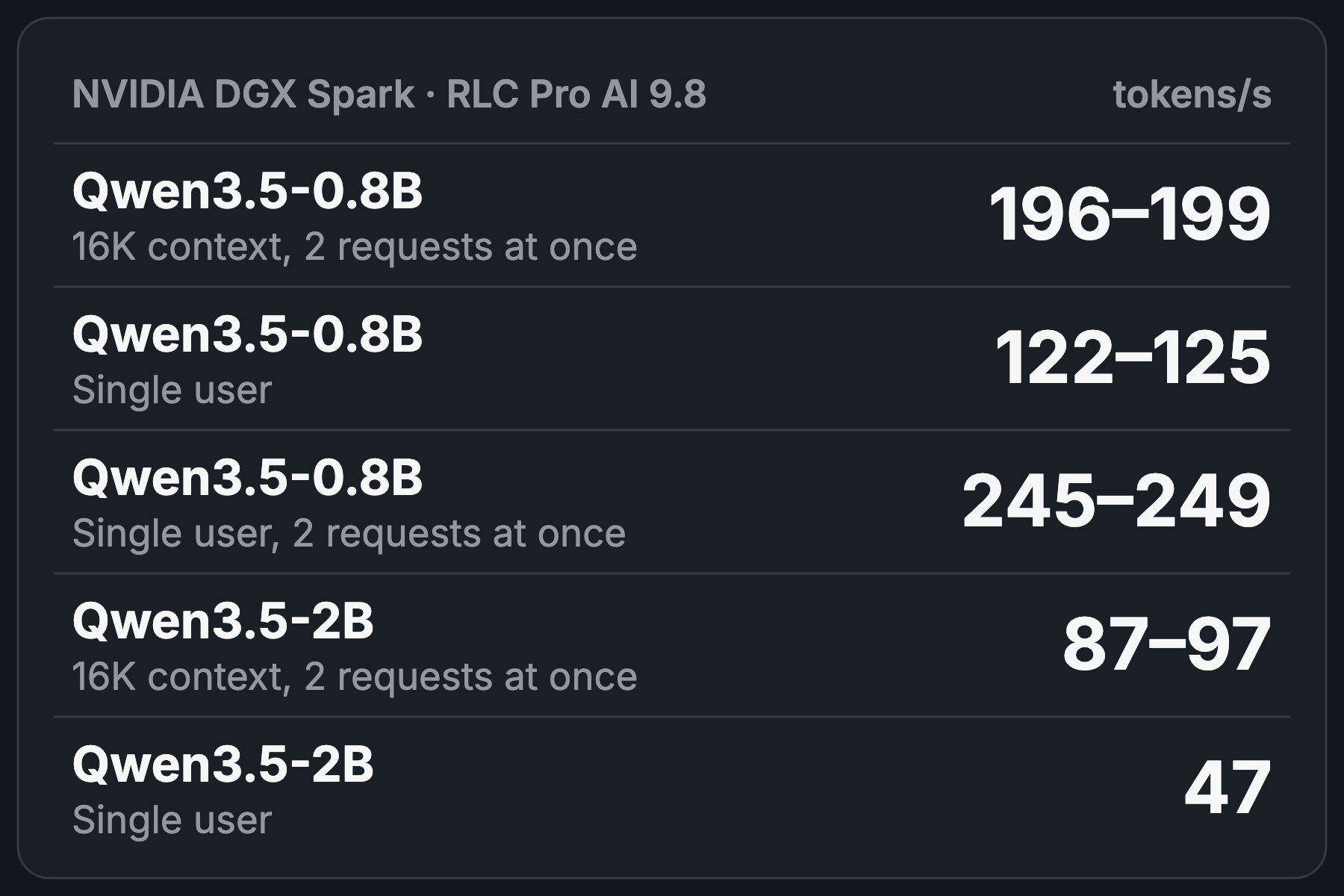
Ranges across 3 to 12 runs, not best runs. Throughput reflects the whole setup: recipe, container, OS, and driver.
A newer kernel is easy to find. One with security patches and a team to call is not.
Happy-path node deployment takes 3 minutes 44 seconds, with nothing to assemble first.
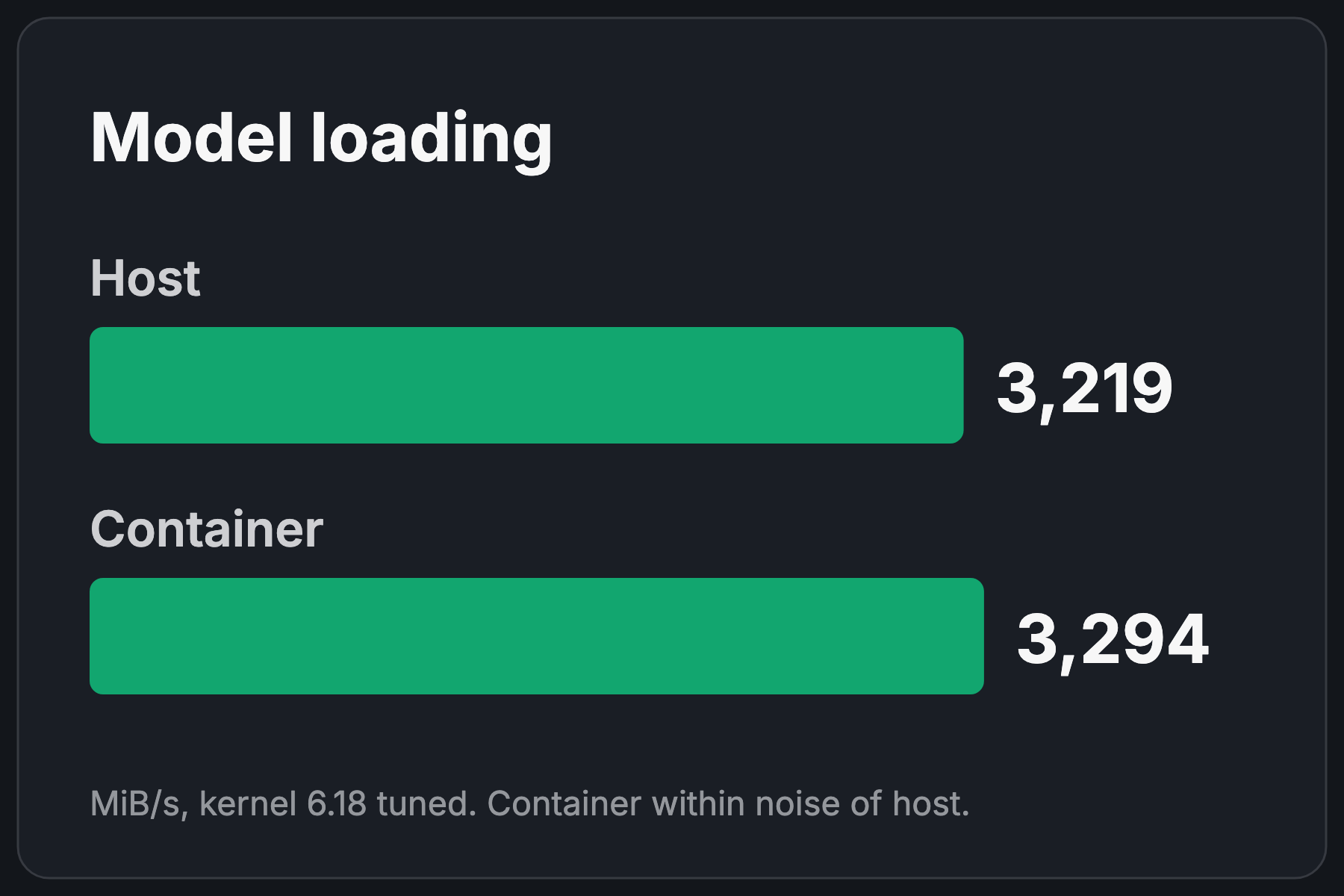
A container pulled onto your laptop today runs the same validated environment production runs months later.
What ships in RLC Pro AI
Everything your build depends on, maintained by CIQ. Exact versions are detailed in the individual release notes.
| Kernel | CIQ Linux Kernel, built from the current upstream long-term release. |
|---|---|
| CUDA toolkit | Current release, validated against the shipped driver and kernel. |
| NVIDIA drivers | Long-term support branch by default, with a newer branch available. |
| AI frameworks | PyTorch and Ollama, with more continuously being added. |
| Container tiers | Base, runtime, devel, workload. |
| Free to use | Devel container image. |
| Architectures | x86_64 and aarch64. |
| Delivery | Boot ISO, KVM, cloud images, OCI containers from the CIQ registry. |
| Developer license | Free for individuals, up to 25 nodes, non-production. |
| Marketplaces | AWS, Azure, Google Cloud. |
| Compatibility | Enterprise Linux compatible. |
| I/O | io_uring enabled by default. |
| Tuning | AI-tuned kernel profile for model loading and inference. |
| Support | Standard and Premium commercial SLAs, with RLC Pro's indemnification and security response. |
Backed by the team that builds the kernel
When the prototype becomes production, RLC Pro AI inherits RLC Pro's indemnification and security response.








Frequently asked questions
On a DGX Spark running RLC Pro AI 9.8 with the 595 driver, Qwen3.5-0.8B served 196 to 199 tokens/s with a 16K context and 2 requests at once, and up to 249 tokens/s for a single user sending 2 requests. Qwen3.5-2B served 87 to 97 tokens/s. Each range spans 3 to 12 runs. Throughput reflects the whole setup, so expect yours to vary with the model and configuration.
Not the OS. The kernel, the NVIDIA driver, CUDA, and the containers you built against are the same ones that run in production. Moving to production is a license change, from Developer to Enterprise. What gets added is enterprise support, indemnification, and security response from CIQ. And against Enterprise Linux 9's 5.14 kernel, the same tuned kernel loads models 33.8% faster on identical storage.
No. The containers and the host operating system come from the same vendor and are tested together, so a host driver upgrade doesn't require rebuilding the container. And running in the container doesn't cost you throughput: in CIQ's testing, models loaded as fast inside it as on the host.
The RLC Pro AI Developer license is free for individuals: up to 25 nodes for non-production, non-commercial use, self-supported, renewed annually. Production runs on the Enterprise license, priced per node. Schedule an evaluation with our sales engineers to scope your environment.
- Inside the DGX Spark benchmarks for RLC Pro AIWebinarLearn more
![]()
- RLC Pro AI delivers top AI performance on NVIDIA DGX Spark with Enterprise Linux stabilityPress releaseLearn more
![]()
- Get more AI speed from your DGX Spark with RLC Pro AIBlog postLearn more
![]()
- Sovereign inference in one pull and deployBlog postLearn more
![]()