A build weekend ahead of SC26
The idea started at ISC 2026 in Hamburg, where CIQ gave away a DGX Spark and asked attendees what they would build on it. Seventy-three people answered with real project ideas, so we set up a weekend to build some.
The weekend before Supercomputing 2026, teams met at the Drive Capital office in the Fulton Market District of Chicago for a hands-on AI build weekend. Each team had two Lenovo ThinkStation PGX machines, powered by the NVIDIA GB10 Grace Blackwell Superchip, connected into a multi-node environment running RLC Pro AI and orchestrated through Fuzzball.
The challenge: build a real AI workload that takes advantage of the full cluster, and show by Sunday what the second node added.
The 14 submissions are collected below. Each page covers what the team built, how they used the cluster and what they measured, in their own numbers.
Challenge tracks
Teams picked one of four tracks to build toward.
Track 1
Multi-Node Training
A training or fine-tuning workload that takes advantage of compute across multiple nodes.
Track 2
Inference at Scale
Multi-node inference for greater throughput, concurrency, model capacity or performance.
Track 3
Scientific AI
Distributed AI and accelerated computing applied to a scientific or research workload.
Track 4
Cluster & Scheduling
Work on orchestration, scheduling, resource allocation, utilization or multi-node infrastructure.
Scenes from the weekend
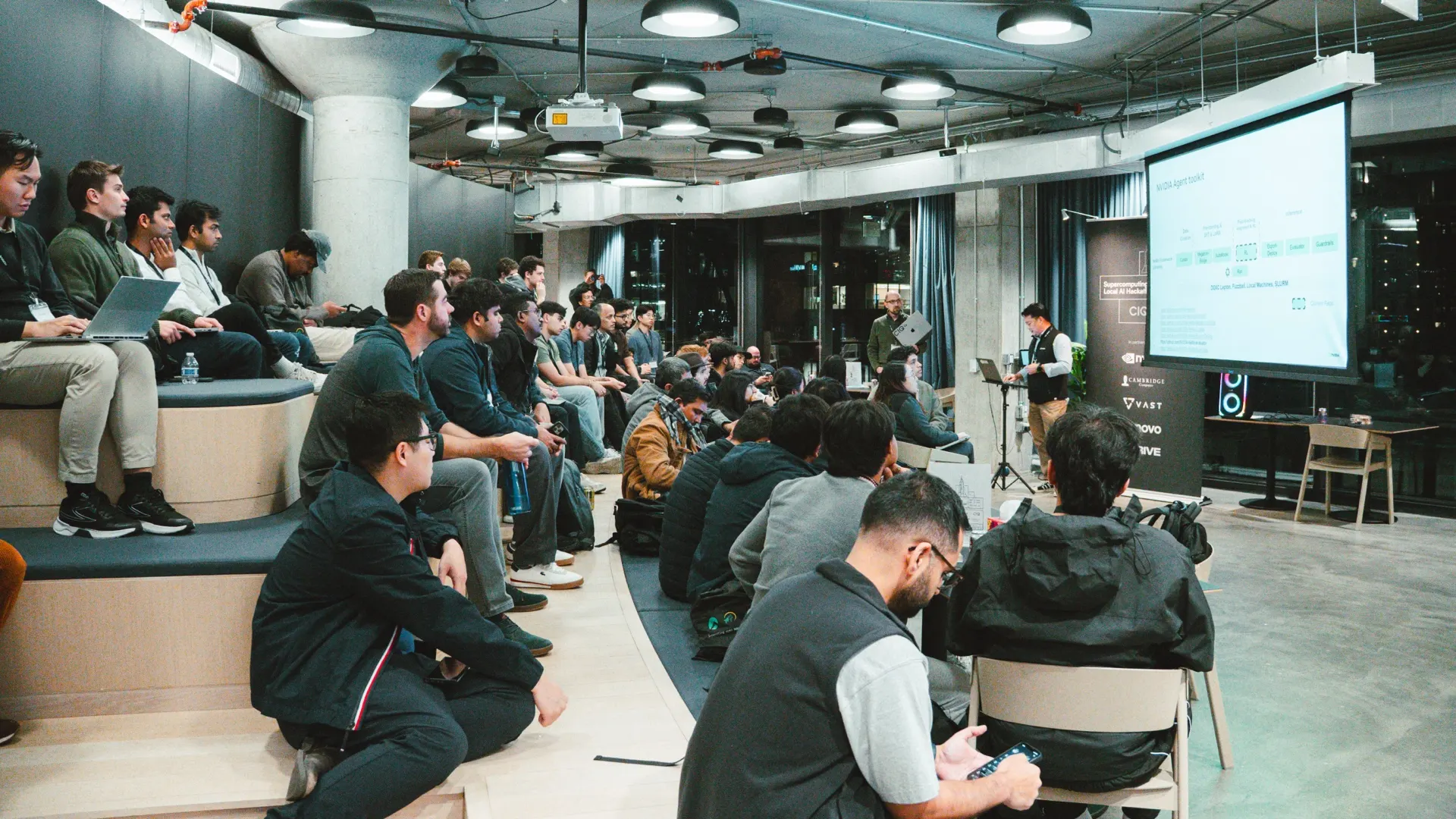
A kickoff talk on the NVIDIA Agent Toolkit. 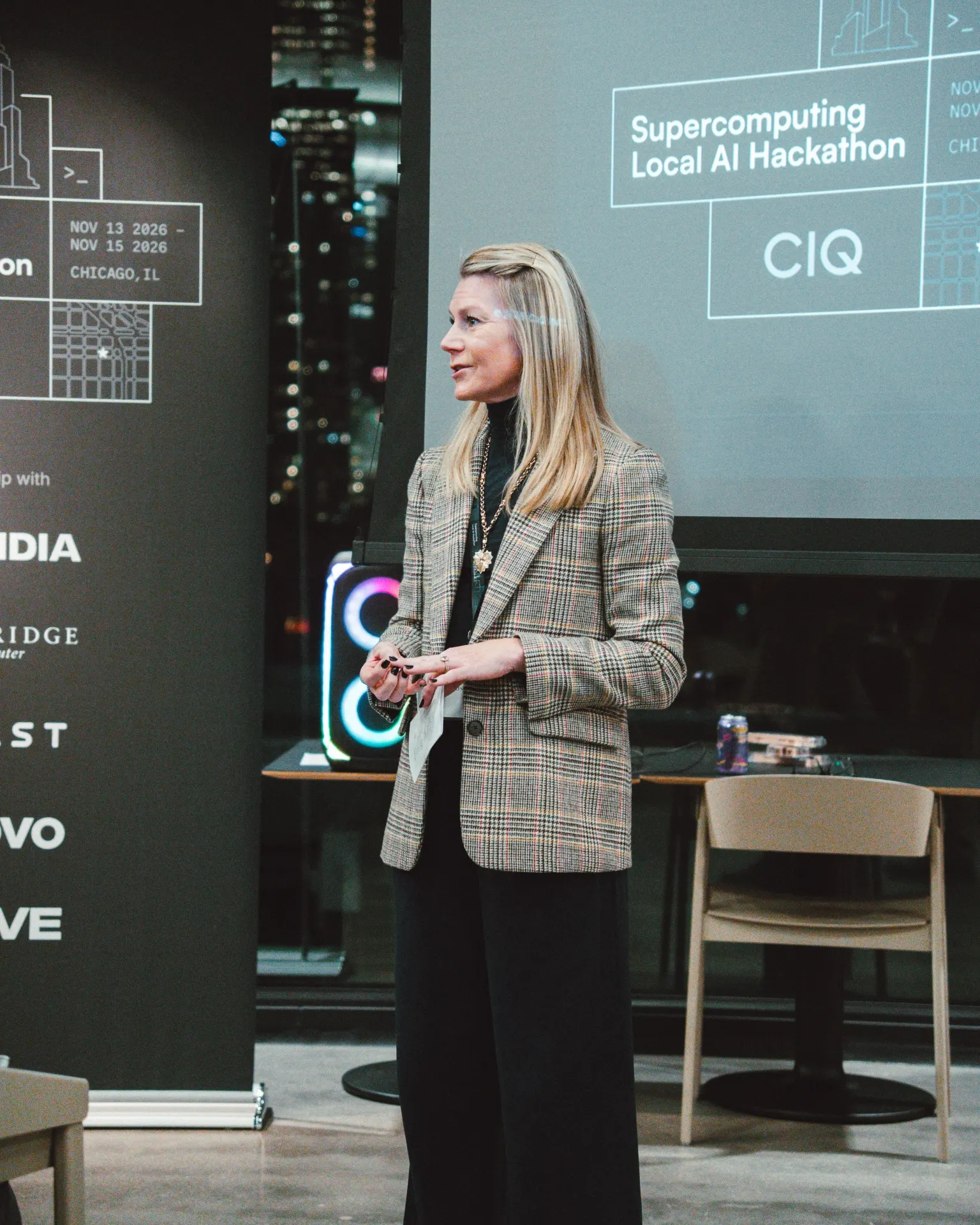
Opening remarks. 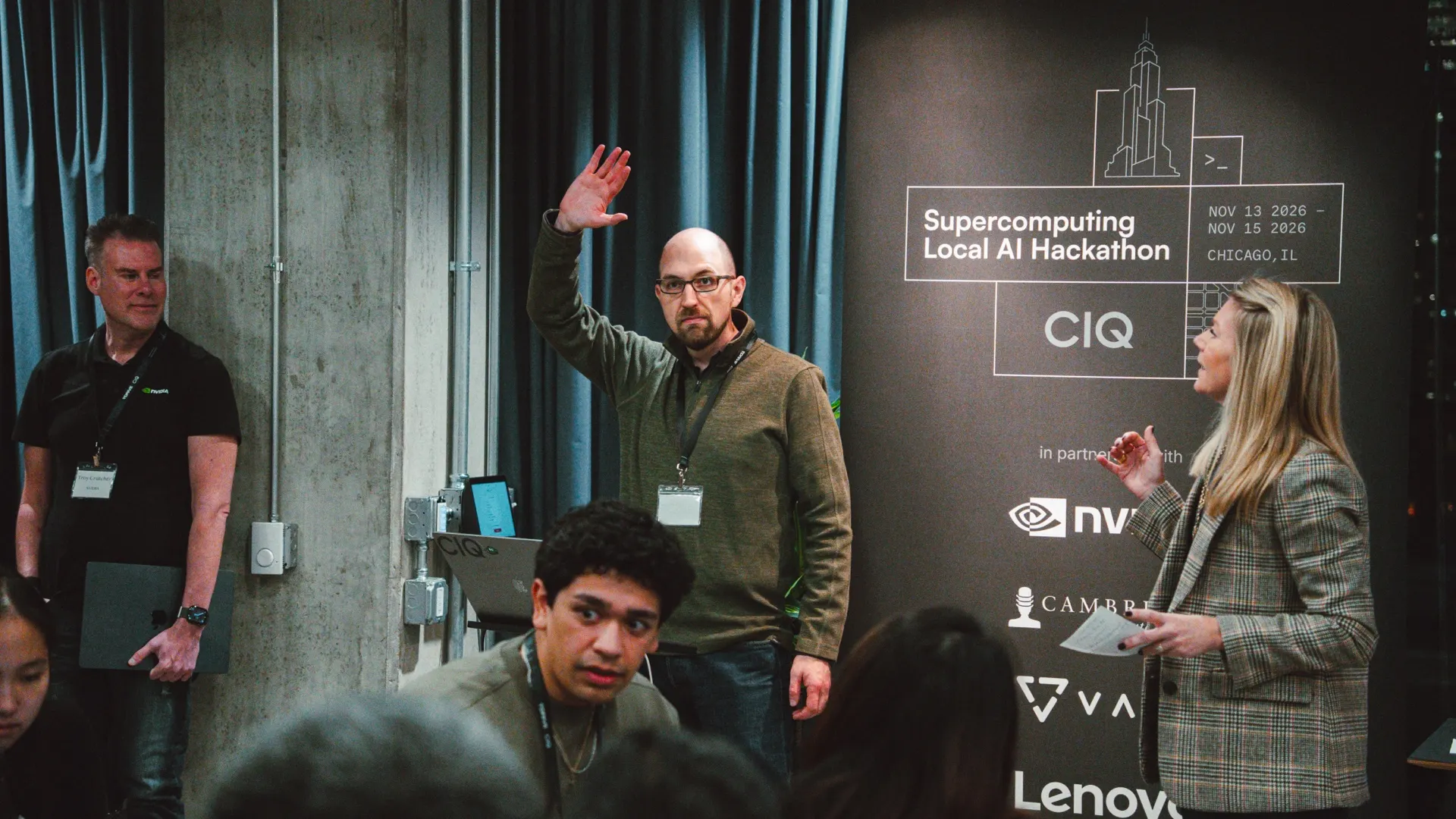
Meeting the mentors. 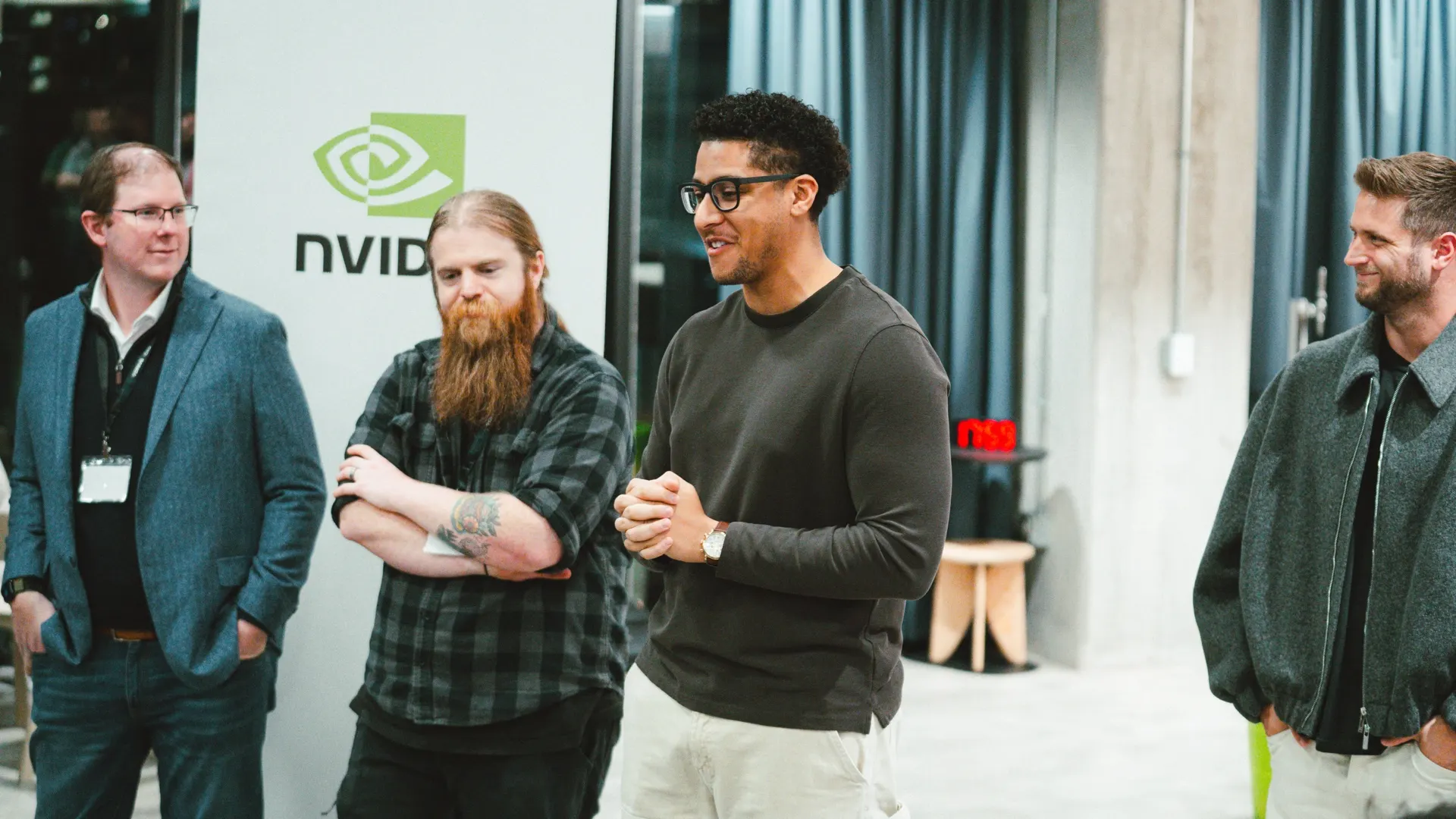
A welcome from the sponsors. 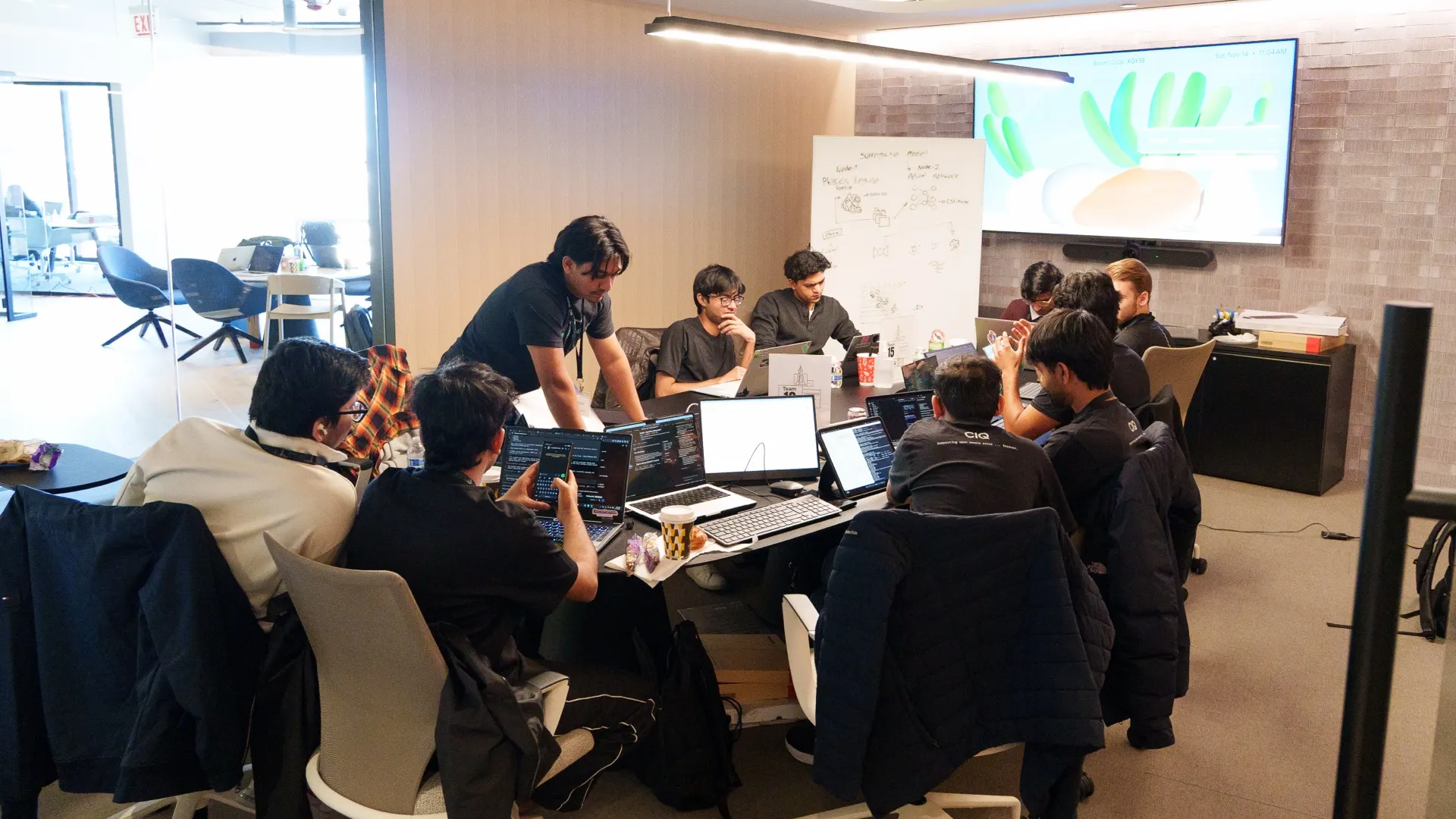
The Team 15 room on Saturday morning. 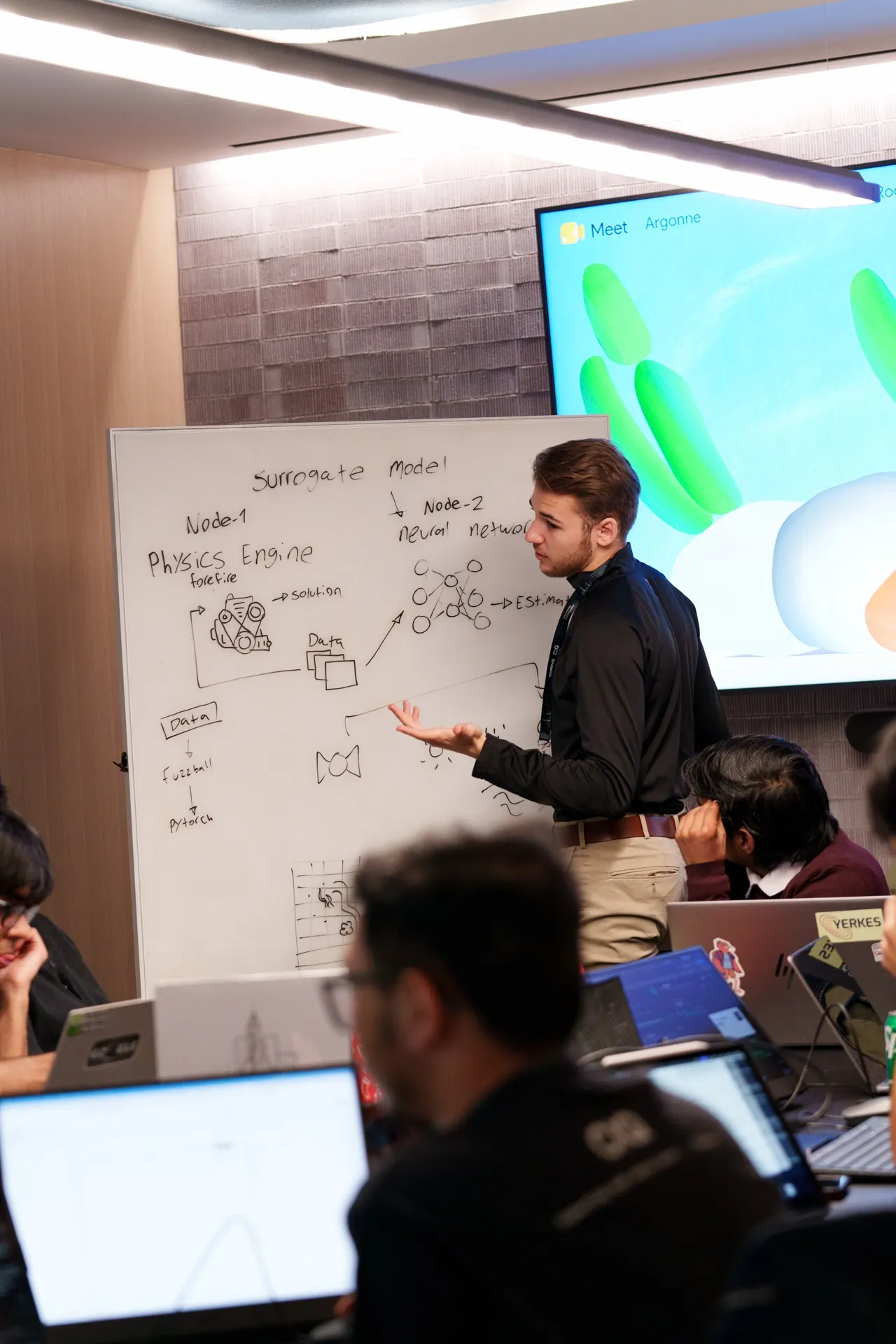
Sketching a surrogate model: physics on one node, a neural network on the other. 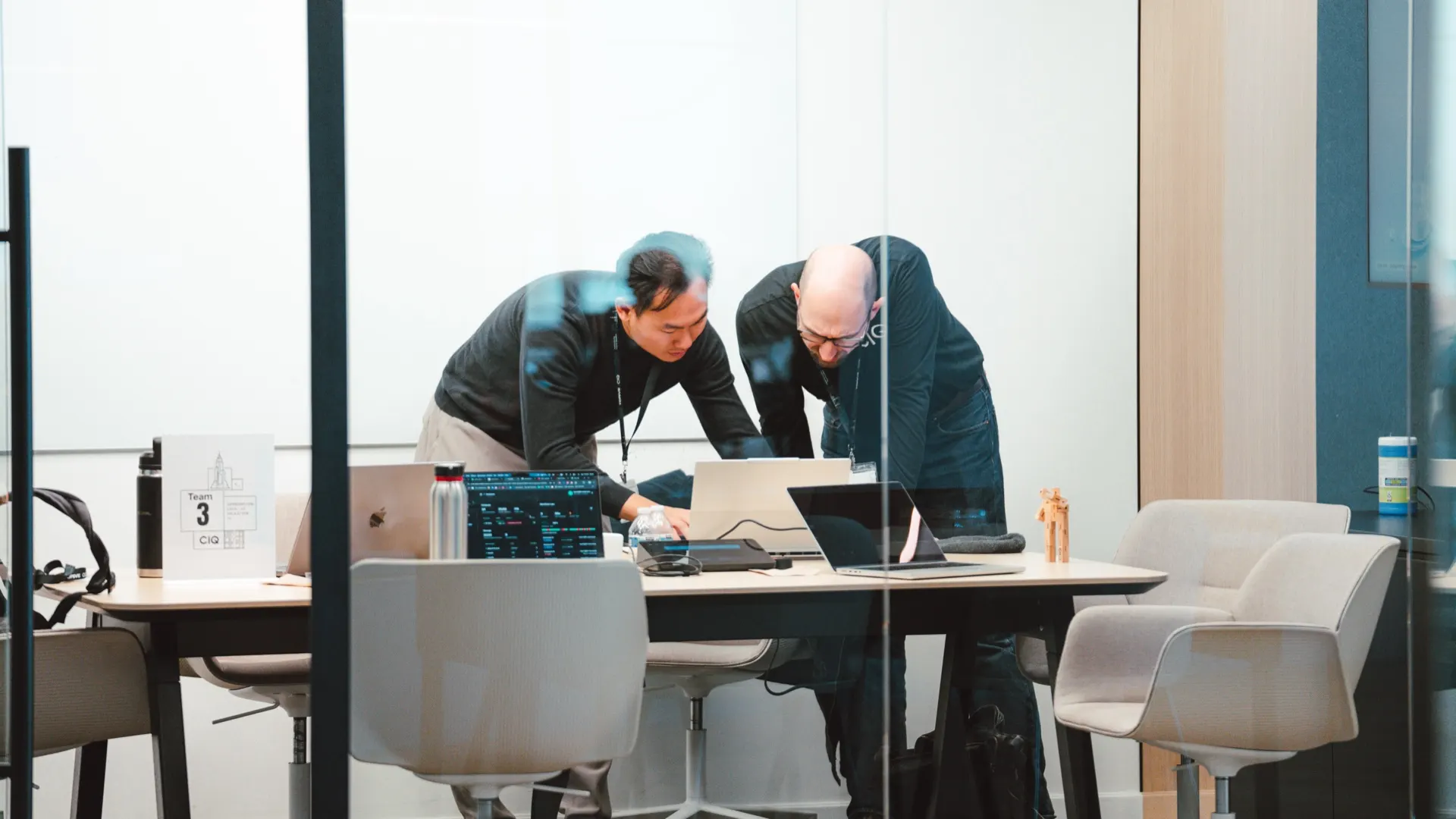
Working through a problem at the Team 3 table. 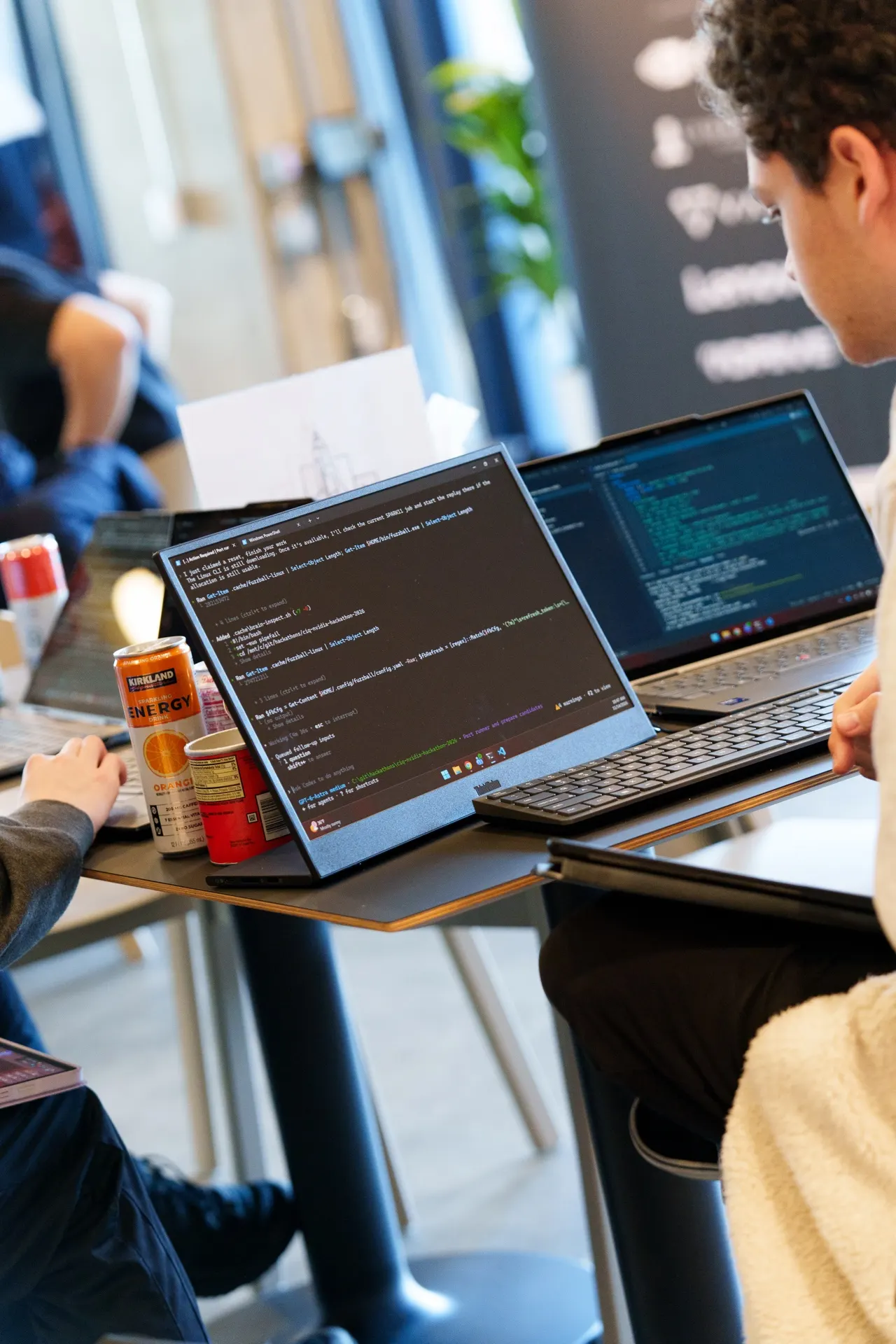
Terminals and caffeine. 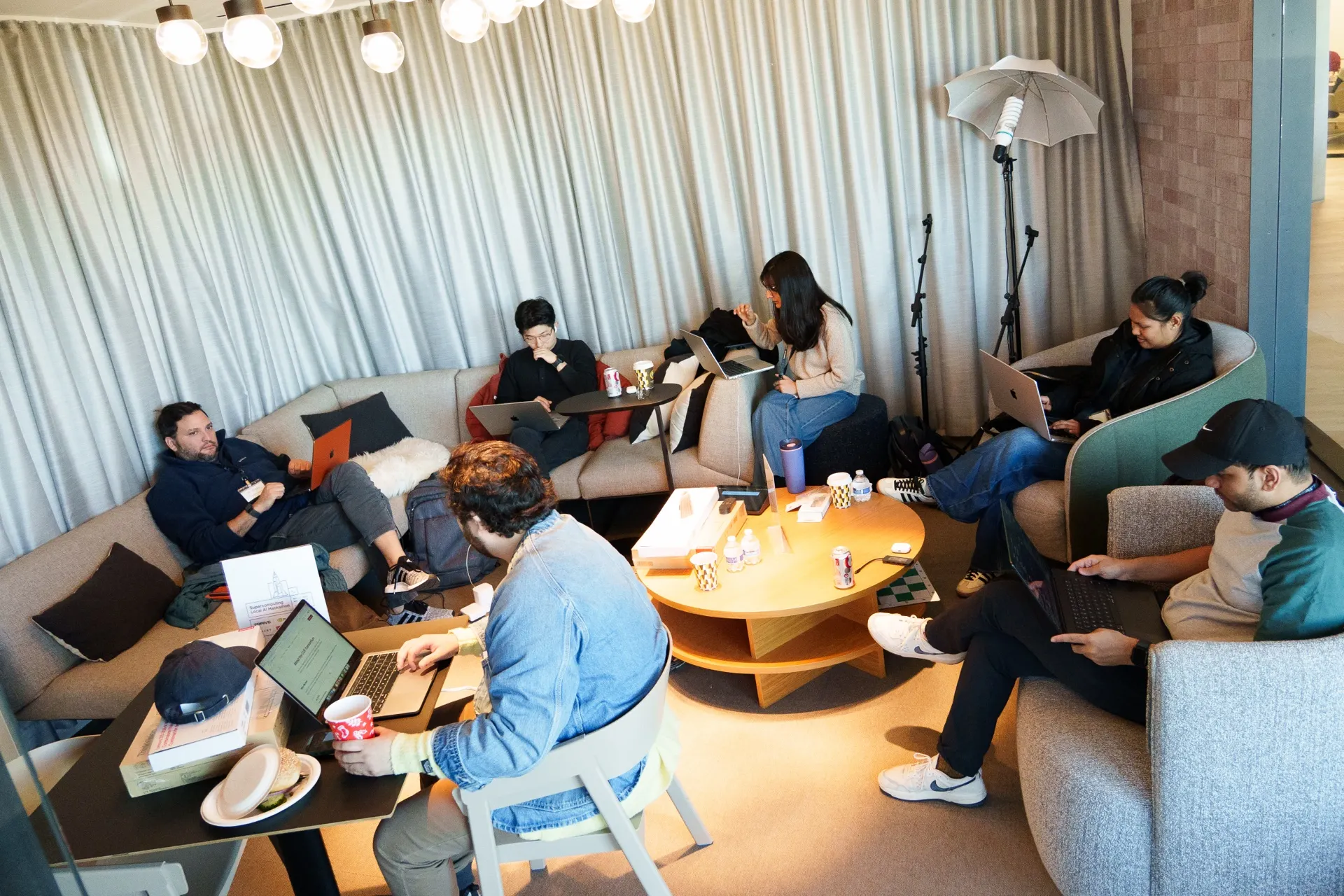
Teams spread out across the venue. 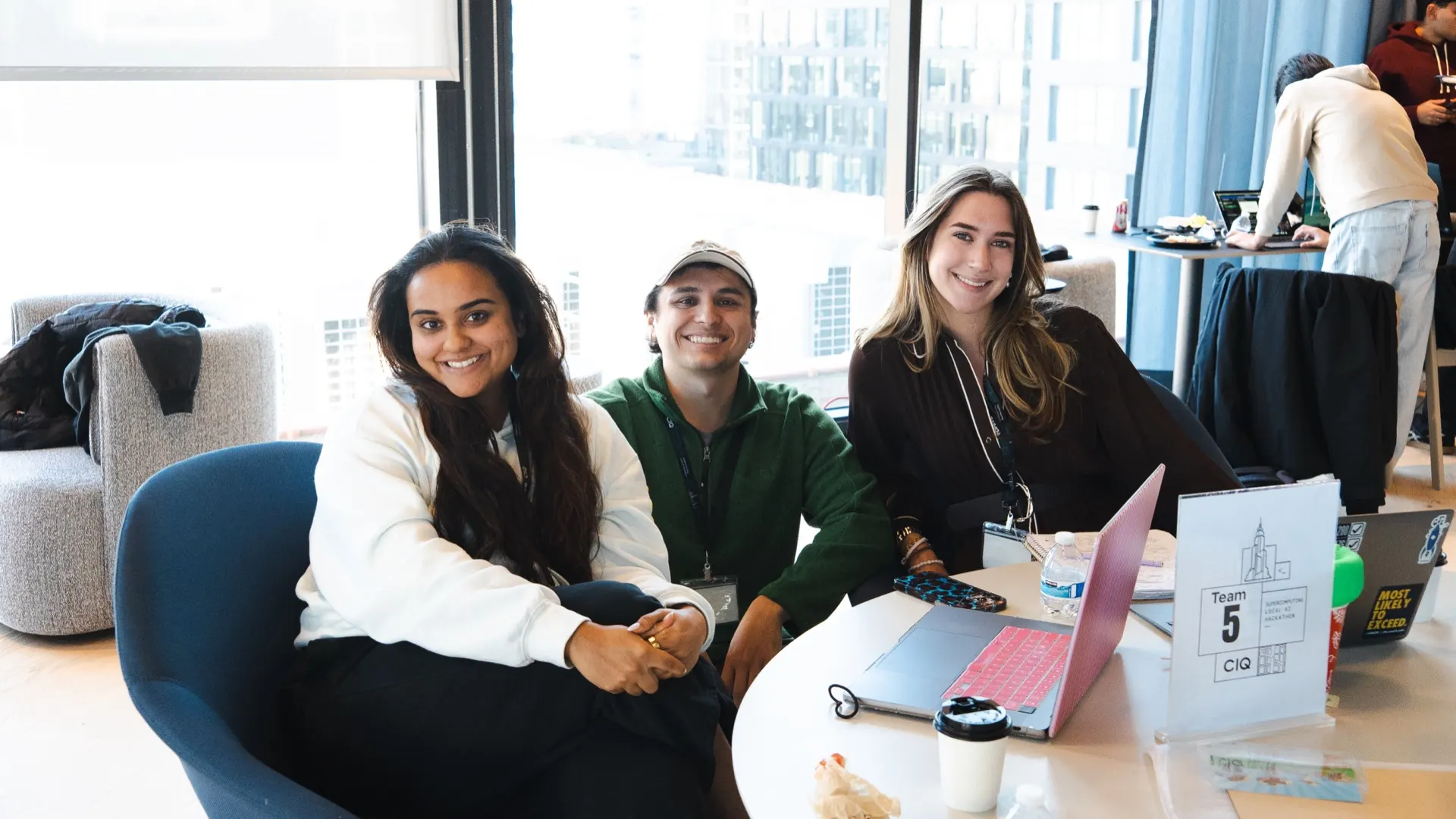
At the Team 5 table. 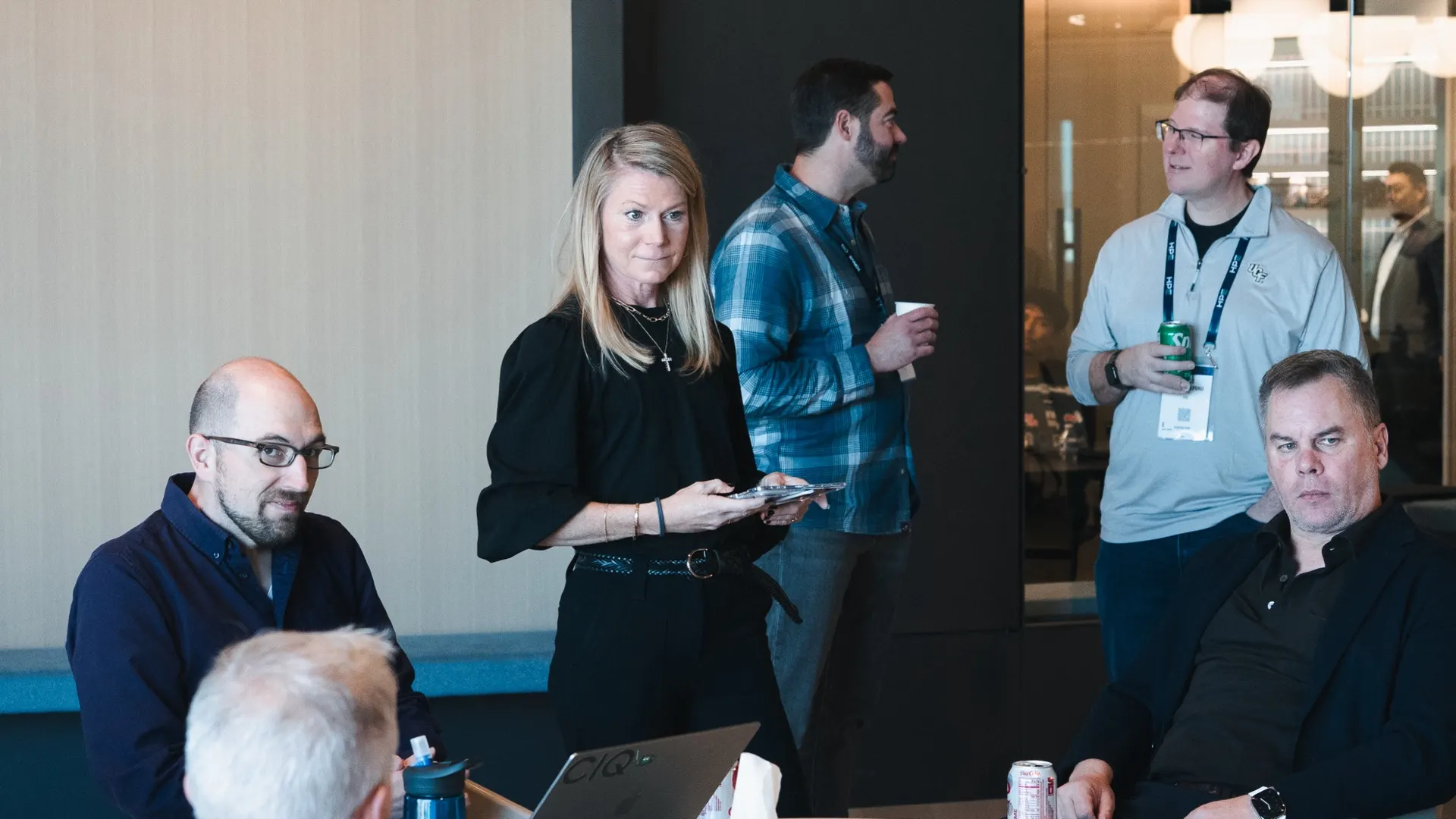
Organizers and mentors between sessions.
Clips from the weekend

Kickoff: build starts now

One weekend, a GB10 cluster per team

Hacking is over. Show what you built.
The projects
Training, inference, scientific AI and scheduling work, all run on two nodes.
Team 1
CoopMoE
Serves a 235B mixture-of-experts model that does not fit in the memory of both machines combined, by letting each node borrow experts from the other before it reads its own disk.
Team 2
Split-Precision KV-Cache LLM Serving Engine
A serving gateway that treats KV-cache precision as a scheduling choice, sending each session to the BF16 or FP8 worker with the shortest predicted completion time.
Team 3
Alchemy
An agent that runs recipe, training and inference experiments on your own hardware and hands back one Fuzzball workflow that fine-tunes a model and serves it.
Team 4
Care Plan Check
Reviews a clinician’s care plan against the visit, the chart and public local data, with the patient side and the web side running as separate Fuzzball workflows.
Team 5
Project Prometheus
Ensemble inference that maps where an ink-detection model can be trusted on an unopened Herculaneum scroll, run as a Fuzzball task array across two nodes.
Team 6
Honest Harvest
Runs training experiments on the idle time of the GPU that hosts an agent’s LLM, and pauses them at the next training step whenever an agent needs the model.
Team 7 (CLIF)
ICU Horizon
Five 24-hour predictions for every patient in an intensive care unit, summed into what the unit will need, from a model trained and run inside the hospital.
Team 8
Alder Audit
Helps Chicago residents find City Council conversations, follow the issues they care about and see what was said, with quotes checked against meeting transcripts.
Team 9
FinScale
Fine-tunes NVIDIA Nemotron-3-Nano 30B on two nodes to turn long annual reports into structured risk signals linked to the source text.
Team 11
Surgical Vision
A surgical review demo from Serelora and OpenSurgery AI that ties a depth orbit, a source-based report and cited clinical reasoning to one frame, and reuses model outputs between views.
Team 12
PRAVAH
A flood intelligence prototype for Nepal that combines satellite water mapping, exposure screening and a map dashboard, with U-Net training distributed across two GB10 nodes.
Team 14
wxrouter
A global weather model trained from scratch, served behind one address across two GB10 machines so forecasts keep flowing while a machine fine-tunes or a server dies.
Team 15 (HPC Hacks)
Ember
Trains a U-Net to imitate the ForeFire wildfire simulator, with CPU cores generating new simulations while both GPUs train one shared model.
Team 15 (solo entry)
LymeScope
Research software that makes every score about a Lyme disease surface protein traceable to its observations, its experimental structure and a reproducible calculation.

Where we plan to hack next
We plan to run hackathons at these events. Dates and details will follow.
March 2027
NVIDIA GTC
San Jose, California
November 2027
SC27
Denver, Colorado
Sponsor a future hackathon
Put your hardware, platform or team in front of the people building on it. Leave your details and our events team will follow up.