At KubeCon CloudNativeCon North America 2026 in Salt Lake City, CIQ launched CIQ Stratum Kubernetes Engine (SKE) and CIQ Stratum Pro, giving teams a simpler way to run Kubernetes for the AI era. SKE installs and upgrades each cluster from one signed file, and Stratum Pro brings every cluster, from GPU clusters to the general fleet, into one interface under one sign-on. Alongside the launch, Bjorn Hovland gave a lightning talk on sovereign AI, and Greg Kurtzer and Bjorn joined Business Insider onstage to talk about how AI should be built.
Here is a look at everything that happened.
Meet CIQ Stratum Kubernetes Engine and CIQ Stratum Pro
Kubernetes has become the place AI runs. According to the CNCF's January 2026 Annual Cloud Native Survey, 66% of organizations hosting generative AI models run some or all inference on Kubernetes. Running it still means keeping about ten upstream projects at compatible versions through every upgrade, on every cluster. In a 2026 survey of 785 Kubernetes decision makers, 62% said that complexity slows business initiatives.
At KubeCon we launched two products to close that gap.
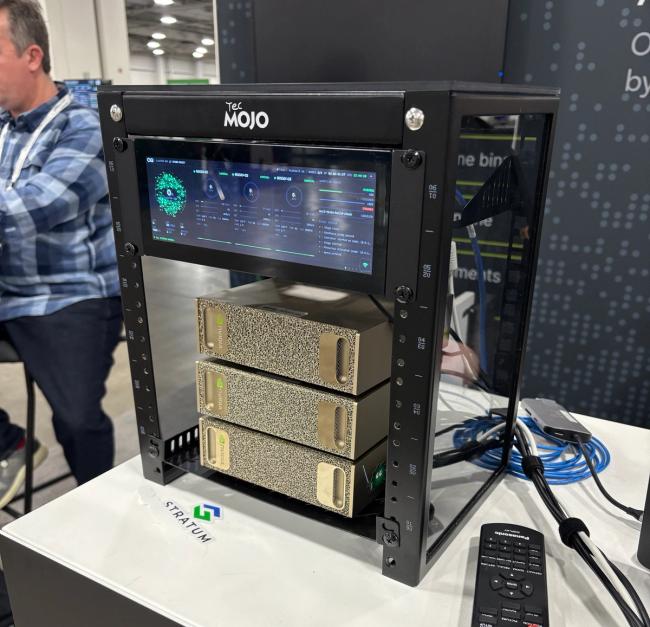
CIQ Stratum Kubernetes Engine (SKE) is a free, open source (Apache 2.0) engine that installs and upgrades a cluster from one signed file. SKE builds Kubernetes, etcd, containerd, runc and kube-vip from unmodified upstream source, adds Cilium and CoreDNS, and pins and tests every component as a set. One command, stratum up, handles the whole lifecycle:
- Install and join: the same file brings up the cluster and adds worker and control-plane nodes
- Upgrade: rolling upgrades check node health at each step and roll back a node that fails
- Snapshot: etcd snapshots run every 12 hours by default
- Renew: certificates renew before they expire
CIQ Stratum Pro is the commercial subscription that brings every SKE cluster, from GPU clusters to the general fleet, into one web interface under the sign-on you already use. It adds:
- Single sign-on through your identity provider, with groups mapped to admin and viewer roles
- A fleet agent that connects outbound only, so clusters need no inbound ports
- A curated app catalog with ingress-nginx, cert-manager and Kueue
- An optional CIS hardening profile at install, with a pass or fail report for each control
- Support from CIQ
Both products are ready for AI agents. A built-in MCP server offers 37 tools in read, write and destructive tiers. Operators choose which tiers to enable, Kubernetes access controls bound every call, and Secrets stay off limits.
Your security team can verify every release before install. Each one ships with a keyless cosign signature, an SPDX software bill of materials for each architecture and a provenance file.
SKE runs on any Enterprise Linux 9 or later distribution on amd64 and arm64, including Rocky Linux, RLC Pro AI and RLC Pro Hardened. Your Kubernetes nodes keep the operating system you already trust. Documentation is public at docs.ciq.com.
Ask who controls your inference
On Monday, November 9, CIQ President Bjorn Hovland gave a lightning talk at Cloud Native AI Inference Day titled Who Controls Your Inference? A Field Guide to Sovereign AI.

Bjorn opened with a recent example. In June 2026, a US export-control directive led Anthropic to disable two of its models for every customer while it complied. Every app built on those models lost them overnight, and none of the operators made that call. The control sat outside their walls.
From there, Bjorn offered an engineering definition of sovereign AI: a control architecture built on four things an operator owns.
- The model: weights on storage you manage, at a version you pinned, with a license you've read
- The inference stack: the kernel, GPU driver and scheduler that decide your throughput and uptime
- The data path: prompts, retrieved documents and logs that stay inside your boundary
- The update cadence: changes that reach production when your pipeline promotes them
For each layer, he walked through open, cloud native building blocks such as vLLM, KServe, the Gateway API Inference Extension, Cilium and GitOps with Argo CD or Flux. He then showed one worked CIQ example per layer, from RLC Pro AI at the operating system and GPU layer, to SKE and Stratum Pro at the cluster layer, to Fuzzball at the workflow and model layer.
Bjorn was candid about the tradeoffs. Frontier hosted models still lead on some of the hardest reasoning tasks, and owning infrastructure means buying GPUs, staffing on-call and owning upgrades. His advice was to decide workload by workload with four questions:
- Would losing access to this model for two weeks stop the business?
- Do latency, throughput or GPU cost drive the business case?
- Do prompts or retrieved documents carry regulated, classified or proprietary data?
- Does a silent model change create audit, safety or accuracy risk?
Two or more yes answers point to infrastructure you own. Most organizations will land on a mix, and the framework makes that split deliberate. His call to action: pick one workload this quarter and run it end to end on infrastructure you own.
Build AI in the open
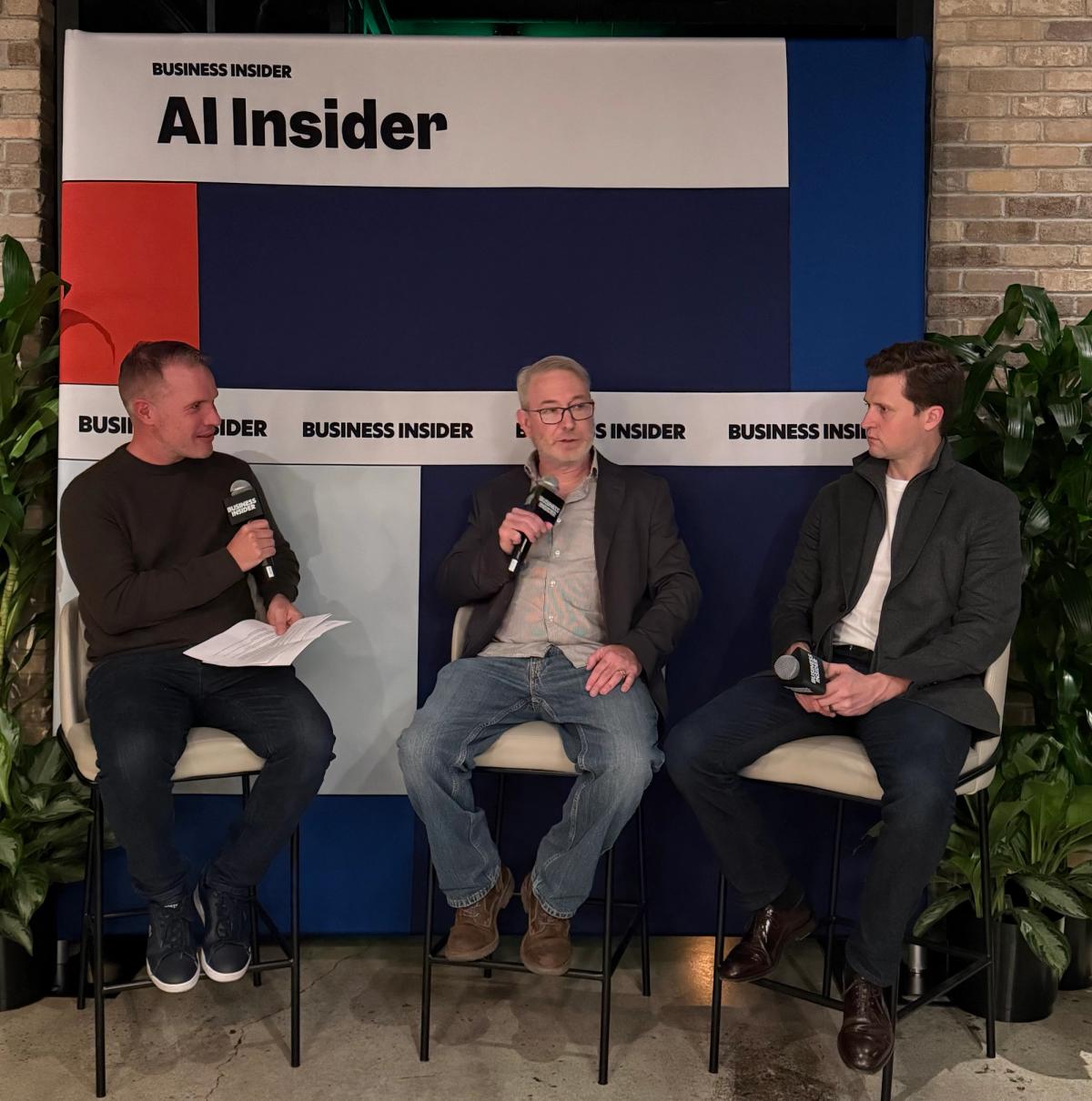
That same evening, CIQ Founder and CEO Greg Kurtzer and Bjorn joined Business Insider onstage at AI Insider: The Great Coding Reset, an on-the-record evening of networking and debate for product, technology and engineering leaders. Chief Correspondent Ben Bergman moderated the conversation, and Tech Anchor Alistair Barr hosted the event.
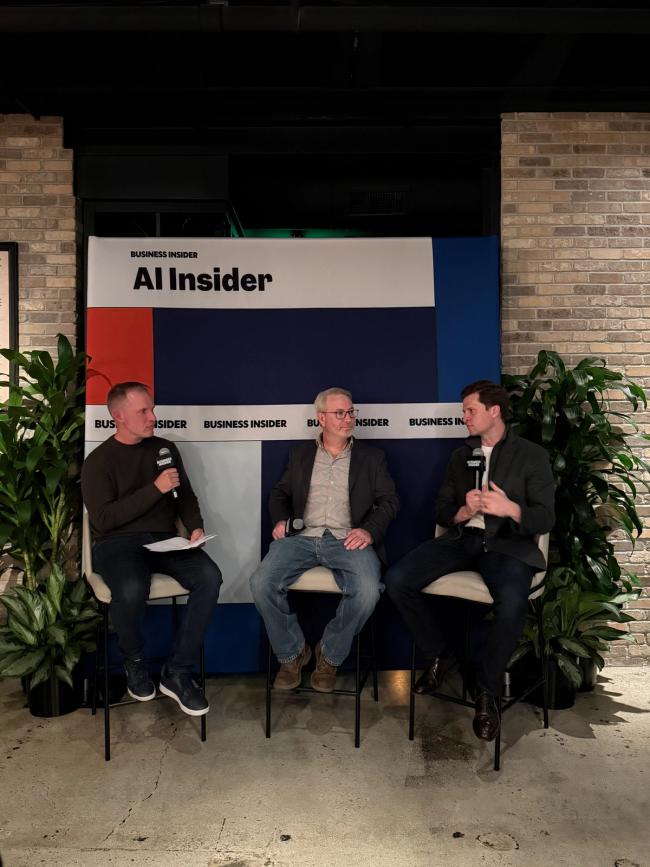
The discussion centered on how AI has changed the way software is written and who writes it. Greg and Bjorn took on that question from two angles.
Greg focused on what AI is built on. Coding agents now produce more code than companies can review, secure or run reliably. Underneath every model sits its training data, which shapes everything the model knows and writes, and today that data is closed. Companies inherit the legal and security risk of data they have never seen. Greg argued that open source already solved this problem once for the internet, and pointed to OpenWALDO, a community-built training dataset where every model trained on it carries a record of its data, licenses and contributors.
Bjorn focused on who controls it. As models get cheaper and easier to access, what sets companies apart is how much of their AI they own. Control begins at the infrastructure layer, starting with the operating system, which most executives never see. With GPU contract prices up about 40% over the past year and governments investing in sovereign AI, Bjorn made the case that organizations should build control in now, before retrofitting it costs far more.
Together they told one story: AI needs an open foundation, and every organization should own the AI it depends on.
Take the next step
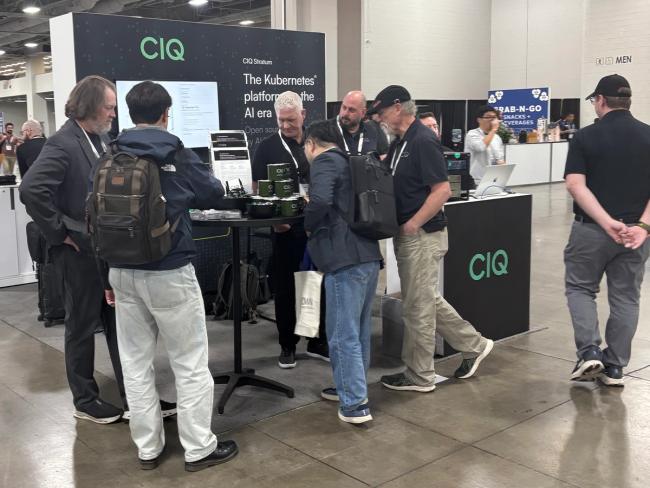
Thank you to everyone who stopped by the CIQ booth, came to Bjorn's session and joined us at Business Insider's event. The conversation about who controls AI is only getting started.
To try SKE or learn more about CIQ Stratum Pro, visit docs.ciq.com or talk with our team. To see how RLC Pro AI, Stratum Pro and Fuzzball fit together, explore our sovereign AI solutions.